Selling an Oriental Rug From an Estate: Is It Hand-Knotted, What Is It Worth, Where Does It Sell
Almost every older New Jersey house has at least one rug that the family calls "the Persian." Some of those rugs are hand-knotted wool pieces that a specialist buyer would want to see. Many are machine-made or hand-tufted rugs that look the part from across the room and sell for ordinary secondhand prices. The difference is not visible from the front. It is visible on the back, in the fringe and in the paperwork, and you can check all three in about five minutes before anyone prices anything. This guide covers the checks, what an appraiser actually tells you (and why an insurance number is not the number a buyer will pay), how to store the rug safely while the estate is sorted, and the realistic routes: a rug specialist, an auction, the estate sale itself, a donation or leaving it with the house.
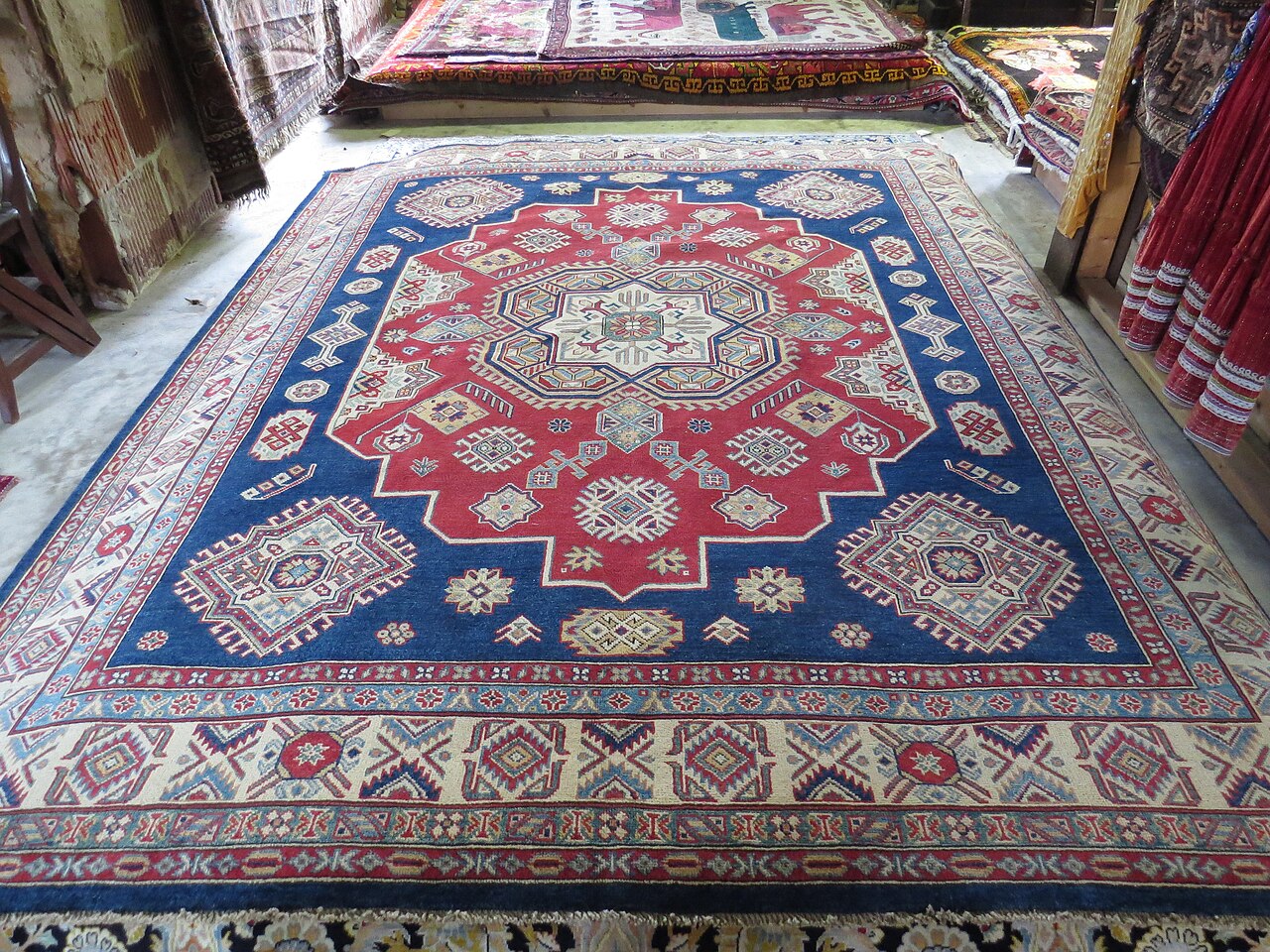
| What you see | What it usually means | Likely route |
|---|---|---|
| Design clear on the back, individual knots you can feel, fringe runs through the rug | Hand-knotted construction | Specialist opinion; written appraisal if the value matters to the estate |
| Even grid-like back, sewn-on fringe, machine-stitched edges | Machine-made (power-loomed) rug | Estate sale at a secondhand price, or donation |
| Canvas or cloth layer glued on the back, design hidden | Hand-tufted or backed rug, not hand-knotted | Estate sale or donation; do not price it as hand-knotted |
| Label naming polypropylene, nylon or acrylic, or the words hand-tufted | Synthetic or tufted rug | Estate sale or donation |
| Hand-knotted, with moth holes, stains or worn patches | Condition will drive the value down or call for a restoration opinion | Ask a specialist before cleaning or repairing |
| A relative wants it | Not for sale | Settle with the executor; roll and store it properly |
The Five-Minute Check: What Kind of Rug Is It?
Rug dealers who publish identification guides agree on the same short list of tests, and none of them needs special equipment. Do these before the rug is moved, rolled or photographed for a listing, and write down what you find.
- The flip test. Lift one corner and look at the back. On a hand-knotted rug the pattern shows on the reverse almost exactly as it appears on the front, and you can feel individual knots as small raised bumps in rows. A machine-made rug has a very even, grid-like woven back. A hand-tufted rug usually has a canvas or cloth layer glued to the back that hides how it was made
- The fringe test. On a hand-knotted rug the fringe is the foundation warp, the lengthwise threads the rug is woven on, continuing past the last row of knots. It cannot be removed without unravelling the rug. On most machine-made and tufted rugs the fringe is a separate strip sewn or glued on afterwards, and a gentle tug at the seam may show movement
- The edges. The sides of a hand-knotted rug are usually wrapped or bound by hand and can look slightly uneven. Machine-stitched edges are perfectly regular
- The color and pattern. Slight shifts in color across a field, often called abrash, and small irregularities in the drawing are common in hand-made pieces. A flawlessly symmetrical design with perfectly uniform color points toward machine production, though uniform color alone proves nothing
- The labels. Turn the rug over near one end and check for a manufacturer's or importer's label. Words such as hand-tufted, or fibers listed as polypropylene, nylon or acrylic, are strong signs that the rug is not a hand-knotted wool piece. Viscose on its own is not conclusive
Why the Answer Changes the Plan
Persian Rug Buyers, a dealer that buys inherited rugs, puts it plainly: hand-tufted rugs are not hand-knotted and are significantly less valuable. A confirmed hand-knotted construction is the first input into any serious valuation, and then origin, fiber, age, condition and size are added on top. That means the flip test tells you which of two very different paths you are on. A hand-knotted wool rug deserves a specialist's eyes, a written appraisal if the value matters to the estate, and a deliberate sale route. A machine-made or tufted rug belongs with the rest of the household goods: price it to move at the estate sale or donate it.
Be honest about the limits of this check. It sorts rugs into likely categories; it does not tell you the region, age or quality. Responsible rug appraisers say the same thing about their own work: rugs have moved across borders for generations, patterns have been copied, and older pieces often have incomplete histories, so a trustworthy appraisal separates the conclusions supported by physical evidence from the details that are estimates.
Document Every Rug Before the House Is Touched
Estates tend to be cleared room by room, and rugs get rolled up, stacked in a garage or sold with the furniture before anyone has looked at them closely. Before that happens, photograph each rug where it lies: the whole rug from a corner standing height, the back, both ends including the fringe, any label, and close-ups of wear, stains, moth damage or repairs. Measure length and width and note the room it came from. Then look through the house paperwork for receipts, gallery certificates, earlier appraisals, insurance schedules and auction records. Persian Rug Buyers notes that documentation is not required for an assessment but can affect value, especially for better or older pieces, and that gallery labels from imports of earlier decades can help identification. Information as simple as where and roughly when the rug was acquired gives an appraiser something to work with.
This record does two jobs. It lets the executor account for the rug as part of the estate, and it gives a specialist enough to give you a preliminary opinion from photographs before you pay for anyone to visit.
Rugs in Every Room and a House to Clear?
Tell us about the house and your timeline, and we'll match you with New Jersey estate sale companies that will walk through the rugs along with every other room, explain how they identify and price them, and put the plan for anything unsold in writing. Free, no obligation.
Get Matched FreeRelated guides: hiring an appraiser before an estate sale, selling furniture from an estate, and what sells best at an estate sale.
What an Appraisal Tells You (and the Number People Confuse)
A professional rug appraisal can describe construction, materials, approximate age, probable origin, condition and a value, and it may help you decide whether to insure, clean, repair, sell or keep the rug. The catch is which value. Sharian Rugs, a specialist dealer, explains that replacement value, the amount needed to replace the rug with a comparable one in the relevant marketplace, is commonly used for insurance, and that it is not necessarily the original purchase price, what the owner could get in a private sale, the price on an online marketplace or the sentimental value.
For an estate this matters because two different families of numbers get quoted. A replacement figure on an old insurance schedule can be far above what a buyer will pay for the same rug on the secondary market. A fair market or resale figure is closer to what you will actually collect. Alyshaan Rugs suggests asking the appraiser for a written report that separates the two and that also gives an age range, likely region of origin, fiber content and dye type. Choose an appraiser who specializes in Oriental rugs rather than a general antiques appraiser, since regional weaving traditions are a specialty, and keep the report with the estate records.
If the number will be relied on by someone else, such as the estate's attorney, the CPA or the IRS for a donated rug, ask them what documentation they need before you hire anyone. Our guide to hiring an appraiser before an estate sale covers appraiser credentials, how they bill and why a percentage-of-value fee is a red flag.
Store It Properly While You Decide
Rugs often sit in a garage, basement or spare room for weeks between the walkthrough and the sale. That is where damage happens. The Textile Museum at George Washington University advises that the best way to store many textiles is rolled, because long folding without padding forms creases that can weaken the foundation or even break a brittle piece. It recommends rolling around an archival support tube and avoiding PVC pipe, which gives off damaging chemicals as it breaks down. The Smithsonian also advises avoiding folding rugs and never using a metal pole as the base for rolling. The UK's Institute of Conservation (Icon) recommends rolling a carpet with the top side out, in the direction of the pile, around a wide-diameter acid-free tube, wrapped in acid-free tissue and a washed white cotton sheet.
- Do not store a rug directly on the floor. The Textile Museum notes that carpet beetles like to settle between the floor and the back of a rug
- Keep it clean, dry and out of direct light. Block bright windows and keep humidity moderate; the museum suggests circulating air if humidity is high
- Do not wrap a rug in plastic for long-term storage, and do not seal a damp rug in anything. Icon and the museum both point to cotton or similar breathable wraps
- Check for pests monthly while it is in storage. Wool is attractive to clothes moths and carpet beetles; look for irregular holes in the wool, cocoons and gritty deposits. The National Park Service's curatorial guidance adds that moths lay eggs in the weave and the larvae are hard to see because they take on the color of what they eat
- If you find signs of an infestation, Icon advises wrapping the rug in polythene to isolate it from other textiles and contacting a conservator, rather than treating it yourself
- Vacuum gently if it needs it. The National Park Service says to avoid beater attachments on historic rugs and to vacuum in the direction of the pile
Your Routes: Specialist, Auction, Estate Sale, Donation or Stay
- A rug specialist or estate rug buyer: appropriate when the flip test says hand-knotted and the rug looks old or well made. Send photographs of the front, back, fringe, label and any damage and ask for a preliminary opinion. Get the offer in writing and compare it with a second opinion and with the appraisal's resale figure, not its insurance figure
- An auction house with a rug or decorative arts department: a way to test the market for a better piece, with the seller paying commission and the final price depending on the day. Ask how the house photographs, describes and guarantees rug attributions and what happens if the rug does not meet its reserve
- The estate sale: practical for ordinary room-size rugs, runners and machine-made pieces, which sell as part of the house. Ask the estate sale company how it will identify the rugs, whether it will hold a notable rug out for separate sale, and where rugs will be displayed so they are not walked on all weekend
- A consignment shop or rug gallery: slower, but may suit a mid-range rug that does not need an auction. Ask for the commission and the time limit in writing
- Donation: charities and thrift stores often take clean, usable rugs, but they do not take every size and condition. Call first. If you plan to deduct the gift, see the tax notes below and our estate sale donation tax deduction guide
- Keeping it: a relative may want it, and a good rug is often easy to hand down. Settle that with the executor before the sale. Our guide to dividing heirlooms and sentimental items covers how families do this fairly
Questions to Ask an Estate Sale Company About Rugs
- Who on your team looks at the back of each rug, and what do you do when you are not sure what a rug is?
- Will you recommend a specialist's opinion before pricing a rug that may be hand-knotted, and who pays for it?
- How do you handle rugs that are in use under furniture on sale day, and who moves the furniture?
- What happens to rugs that do not sell: are they included in the cleanout, donated or returned to the family?
- Can I see the written terms for any item the company wants to remove from the estate sale for a private sale or consignment?
Taxes, Briefly
Property inherited from a decedent generally takes a basis equal to its fair market value at the date of death under 26 U.S.C. 1014. For a rug that means that selling it soon afterward at a price close to that date-of-death value usually produces little or no taxable gain, but the date-of-death value needs to be documented, which is another reason a written appraisal that states a fair market value helps. If the rug is donated to charity and total noncash gifts for the year exceed $500, the IRS requires Form 8283, and Publication 561 explains how to determine the value of donated property. A rug with a meaningful value generally calls for a qualified appraisal rather than a casual estimate. This is general information, not tax advice; check with the estate's CPA or attorney.
Mistakes That Cost Estates Money
- Pricing the rug from the story. "Bought in Persia" or "it cost thousands" can be true and still say little about what it is worth now, and the original price is not a replacement or resale value
- Trusting the front. Many tufted and machine-made rugs photograph well and show a convincing pattern. Check the back and the fringe
- Cleaning or repairing before an opinion. Do not wash, trim, re-fringe or patch a rug that might be old until a specialist has seen it
- Folding it into a closet. Long folds make creases that weaken the rug. Roll it on a wide tube
- Letting it go with the furniture. A rug thrown into a bundled lot or left in a dumpster-bound pile may be the most valuable thing in the room
- Treating an insurance schedule as a sale price. Replacement figures and resale figures are different numbers
For what happens to everything else, see what happens to unsold items after an estate sale and estate sale donation tax deductions. If relatives want the rug, read dividing heirlooms and sentimental items. This page is general information, not an appraisal or legal or tax advice.
Sources
- Persian Rug Buyers: Selling an Inherited Rug (documentation, labels, hand-knotted vs. tufted)
- Ahmadi Rug: How to Tell if a Rug Is Handmade (flip and fringe tests)
- Catalina Rug: Machine Made vs Handmade Persian Rugs (back, fringe, edges, labels)
- Sharian Rugs: What Can an Oriental Rug Appraisal Tell You? (replacement value, uncertainty)
- Alyshaan Rugs: Inherited a Persian or Oriental Rug? (written appraisal separating insurance and resale value)
- The George Washington University Museum and The Textile Museum: Storing Textiles
- Icon (Institute of Conservation): Carpets and Rugs
- Smithsonian Institution: How do I store antique textiles at home?
- National Park Service: Curatorial Care of Textile Objects (pests, vacuuming rugs)
- IRS: About Form 8283, Noncash Charitable Contributions
- 26 U.S.C. 1014: Basis of property acquired from a decedent
Frequently Asked Questions
How can I tell if a rug is hand-knotted?
Turn up a corner. A hand-knotted rug shows the design clearly on the back, in the same colors, and you can feel individual knots. A machine-made rug has a uniform, grid-like back, and a hand-tufted rug typically has a canvas or cloth layer glued over the back. Also check the fringe: on a hand-knotted rug it is the structural warp running through the rug, while on most machine-made rugs it is sewn or glued on afterwards.
Is an old Persian rug from an estate worth anything?
It can be, but the label "Persian" and the age of the rug do not decide it. Construction comes first (hand-knotted rather than machine-made or tufted), then fiber, origin, age, condition and size. Two similar-looking rugs can be worth very different amounts, so a photograph-based opinion from a rug specialist or a written appraisal is the way to find out.
What is the difference between insurance replacement value and resale value?
Replacement value is the cost of replacing the rug with a comparable one in the relevant marketplace and is commonly used for insurance. It is not necessarily the original price, what you could get from a private sale or the sentimental value. Resale or fair market value is closer to what a buyer will pay. Ask an appraiser for a written report that states both separately.
Should I clean or repair an inherited rug before selling it?
Generally no, not until a specialist has seen it. Washing, trimming, re-fringing or patching can change a rug's character and may affect its value. Vacuum gently in the direction of the pile if needed, and note stains, holes and repairs in your photographs.
How should I store a rug while the estate is being settled?
Roll it rather than fold it, ideally around a wide, archival tube (not PVC), wrapped in a clean cotton sheet, and keep it off the floor in a clean, dry, shaded place. Museum guidance recommends checking stored textiles for moth and carpet beetle damage regularly. If you find signs of an infestation, isolate the rug and contact a conservator.
Will an estate sale company sell my rugs?
Yes, rugs are a normal part of an estate sale, and ordinary room-size and machine-made rugs sell well that way. If you think a rug is hand-knotted and valuable, ask the company before the sale how it will identify the rug and whether it will hold it back for a specialist's opinion. Put anything you agree to in writing.
Get Matched With an Estate Sale Company
Compare walkthroughs and written terms from New Jersey estate sale companies that look at the back of every rug, tell you how they will price the good ones, and put the plan for what doesn't sell in writing.
Get Matched Free