Selling a Piano From an Estate: What It's Worth, Who Moves It, and Where It Goes
A piano is the one item in an estate that nobody can carry out to a car. It is heavy, it needs trained movers, and its value swings from real money to nothing depending on the make, the age and what is going on inside the case. Families tend to guess in one of two directions: that it must be worth a lot because it is big and old, or that it is worthless because they have seen free pianos listed online. Neither guess is reliable. This guide covers how to identify the piano, who is qualified to say what it is worth, why the person who buys it usually has to pay for the move, and how to decide among a private sale, a dealer, an estate sale company, a donation and removal.
| If this is true | What to do first | Likely route |
|---|---|---|
| Recognized maker, keeps pitch, all keys play | Technician inspection; decide whether you need a formal appraisal | Dealer, consignment or private sale with buyer handling the move |
| Grand piano or a well-kept older upright | Photograph, find the serial number, get the technician's structural opinion | Dealer or private sale; ask about estate sale only if the company handles heavy items |
| Plays but will not hold a tuning | Ask a technician whether the pinblock is failing | Low-priced private sale or call a school or church before promising a donation |
| Cracked soundboard, loose ribs, rattles or buzzes | Technician verdict: worth rebuilding or not | Usually removal, unless a buyer wants a project |
| A relative wants it | Settle it with the executor before it is priced or listed | Keep in family; arrange a professional move |
Start With What You Actually Have
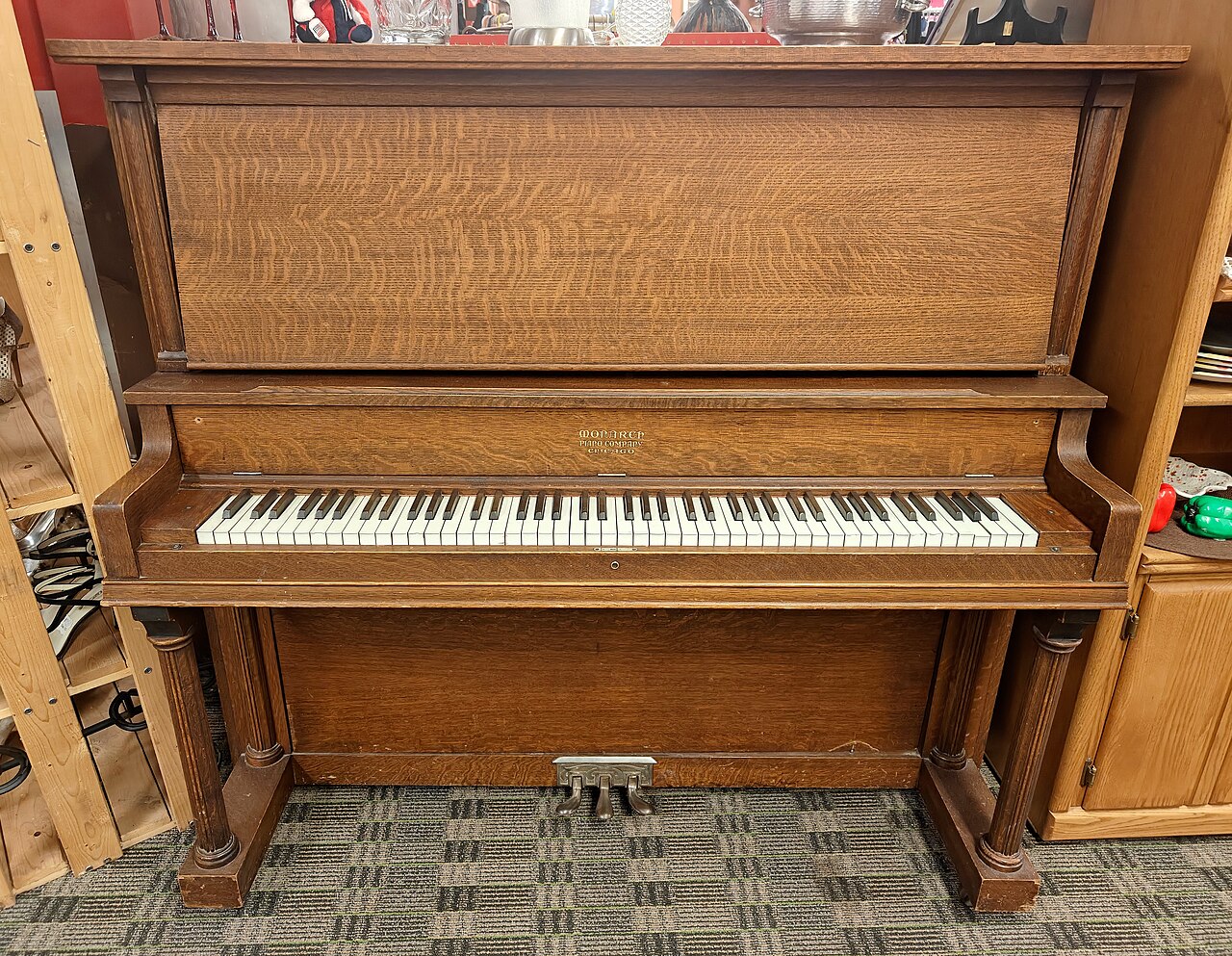
Before anyone prices anything, write down the facts a buyer or technician will ask for. Take photos of the whole piano, the keyboard with the fallboard open, the inside (lift the top lid on an upright or look under a grand), the brand name on the case or fallboard, and any stickers or labels. Then find the serial number. The Piano Technicians Guild (PTG) says pianos almost always have one, usually five or six digits, and that it can be in unexpected places. On an upright it is usually stamped on the plate near the top or in a window in the plate. On a grand it is most often stamped on the plate in the V-shaped area between the tenor and bass sections or at the treble end, and sometimes in the soundboard under the strings. PTG also warns about a common trap: dates cast into the plate are the year the company was founded, not the year your piano was made. Other numbers stamped on parts are manufacturing numbers, not the serial number.
Dating the Piano Is Only the First Step
The serial number lets a technician look up the year of manufacture, often in a reference such as the Pierce Piano Atlas, which Piano Buyer recommends for this. But age is a weak shortcut for value. PTG says a piano's value is influenced by its condition, age, make and model, and the market in which it would be sold, and its Seattle chapter's appraising guidelines add that the question should never be answered without seeing the piano in person. A well-kept older instrument from a respected maker can be worth more than a neglected newer one, and a very common brand in poor condition can be worth very little, whatever the year. Record the serial number and brand on your inventory and keep any papers that came with the piano, such as the original bill of sale, tuning records or a service history.
A Piano and a Whole House to Clear?
Tell us about the house and your timeline, and we'll match you with New Jersey estate sale companies that can walk through the piano along with every other room, explain who handles heavy items, and put the plan for anything unsold in writing. Free, no obligation.
Get Matched FreeRelated guides: pianos, safes and pool tables an estate sale can't move, hiring an appraiser before an estate sale, and selling furniture from an estate.
Why a Technician Inspection Comes Before Any Price
PTG's advice to buyers is blunt: have a Registered Piano Technician (RPT) look at the instrument, and treat "free" or "cheap" pianos with caution because they can turn out to be the most expensive if the piano needs a complete rebuild to be playable. The same inspection helps a seller, because it tells you which kind of piano you have before you put a number on it. A technician will look at the pinblock and tuning pins, the soundboard and its ribs, the bridges, the hammers and action, the strings and the pedals. PTG's examples of serious problems include a pinblock that no longer holds tuning pins tightly, rattles or buzzes from cracked soundboards or loose ribs, split bridges, and hammers worn so far that wood is striking the strings. Keys that simply do not play are often a minor repair.
A Technician's Estimate Is Not an Appraisal
This is where estates get confused. PTG says the answer to "how much is my piano worth?" depends on how the number will be used. If you only need to decide what to ask in a private sale, an experienced RPT who knows the local market may be able to help you set a reasonable asking price. If someone else will rely on the value, such as an insurance company, an attorney, an accountant, a court or the IRS, PTG says you generally need a professional appraisal from a qualified, accredited appraiser, and specifically lists estate settlement, divorce and charitable contributions among those situations. In an estate, the number often is relied on by someone else: the executor, the estate's attorney, the CPA, the heirs who are splitting contents. Decide up front which question you are answering.
The Value Levels Technicians Talk About
PTG's Seattle chapter, in its appraising guidelines for member technicians, describes several legitimate levels of piano value, and they are worth knowing because families often compare numbers that are not the same kind:
- Private retail value: what a piano might bring when the owner sells it directly, as is, with no warranty and no moving included. The guidelines suggest tuning to pitch and making minor repairs so all the notes play
- Dealer retail value: higher than private value, because the dealer takes on commissions, trade-ins, repairs and guarantees
- Consignment value: usually a percentage of the eventual selling price
- Wholesale value: the lowest number, what a buyer pays if the owner just wants to be cashed out and the piano moved on
Who Pays for the Move
PTG's buyer guidance says that when a used piano is bought privately there is no warranty and the moving cost is usually the buyer's responsibility. That is the single most useful fact for pricing an estate piano. A piano is heavy, top-heavy and easy to damage on stairs, so buyers typically need professional piano movers. One Colorado hauling company's table of manufacturer specs, for example, lists a compact Yamaha b1 upright at 384 pounds, a Yamaha U1 at 502 pounds, and a Steinway Model D concert grand at 1,064 pounds. Whatever the exact model, plan on a crew rather than friends with a dolly. When you list or advertise the piano, say clearly that the buyer arranges and pays for removal and give the access details: stairs, tight turns, a basement, a second floor. Buyers who know a move will be hard will price that in, and the ones who do not will find out at pickup and walk away.
Your Routes: Sell, Consign, Donate or Remove
- Private sale: photos of the keys and the inside, the brand and serial number, a technician's inspection if you can get one, and a clear statement that the buyer handles the move. Expect slow interest on common older uprights
- Dealer, trade-in or consignment: worth a call if the piano is a recognized brand or a grand. Dealers know their market, but the number you are offered will sit below retail value for the reasons above
- Estate sale: a piano can be shown at an estate sale, but a typical shopper cannot carry it out. See our guide on large items an estate sale can't move for how companies handle pianos and who pays when they stay behind
- Donation: churches, schools and music programs sometimes accept a playable piano, but most of them need it delivered. Call before you promise anything, and see our estate sale donation tax deduction guide for the paperwork if you plan to claim a gift
- Removal: if the piano is beyond use, a piano mover or specialty hauler can take it away. Get quotes before the sale so the cost is not a surprise on the final settlement
Questions to Settle Before the Sale Date
- Is any family member hoping to keep the piano? Ask before it is priced or listed, and see our guide to dividing heirlooms and sentimental items
- Is the piano named in the will or part of a specific bequest? Check with the executor or attorney before moving it
- Who will be relying on the value? If it is the estate's attorney or CPA, ask whether they want an accredited appraisal
- Is removal included in the estate sale company's commission, or billed separately? Ask in writing
- Is there a deadline, such as a house closing, that makes a quick removal worth more than a higher price later?
Taxes, Briefly
Two general rules matter for a piano. First, property inherited from a decedent generally takes a basis equal to its fair market value at the date of death under 26 U.S.C. 1014, so selling an inherited piano close to that value usually produces little or no taxable gain, but the date-of-death value should be documented. Second, if the piano is donated to a charity, the IRS requires Form 8283 when total noncash gifts for the year exceed $500, and publishes Publication 561 on determining the value of donated property. A piano with a meaningful value generally calls for a qualified appraisal rather than a casual estimate. This is general information, not tax advice; confirm with the estate's CPA or attorney.
Mistakes That Cost Estates Money or Goodwill
- Pricing from a dealer's showroom ads. A dealer's retail price includes reconditioning, a warranty and moving, none of which an as-is private seller offers
- Relying on the date cast into the plate. PTG says that is the company's founding year, not the piano's
- Promising a donation before the recipient has agreed. Many organizations decline a piano that will not hold pitch, and most need it delivered
- Letting a buyer move it without a plan. Damage to the floor, the stairs or the piano itself becomes an argument; use a professional piano mover
- Skipping the inspection and then discovering a cracked soundboard after the listing is up
For what happens to everything else, see what happens to unsold items after an estate sale and estate sale donation tax deductions. If relatives want the piano, read dividing heirlooms and sentimental items. This page is general information, not an appraisal or legal or tax advice.
Sources
- Piano Technicians Guild: Expert FAQs (serial numbers, how much is my piano worth, finding a technician)
- Piano Technicians Guild: Buying a piano (private-sale terms, condition problems, moving cost)
- Seattle PTG: Piano Appraising Guidelines (levels of value)
- Piano Buyer: Inspecting a Used Piano Before Buying (serial number, Pierce Piano Atlas)
- Sam's Hauling: How to Get Rid of a Piano (manufacturer weights, donation and removal)
- IRS: About Form 8283, Noncash Charitable Contributions
- 26 U.S.C. 1014: Basis of property acquired from a decedent
Frequently Asked Questions
How do I find out when my inherited piano was made?
Find the serial number, which the Piano Technicians Guild says is usually five or six digits and is typically stamped on the plate: near the top or in a window in the plate on an upright, and often in the V-shaped area between the tenor and bass sections on a grand. A technician can look up the manufacture year in a reference such as the Pierce Piano Atlas. Do not use a date cast into the plate; PTG says that is the year the company was founded.
Is an old piano worth anything?
It depends on the make and model, condition, maintenance and the local market, not age alone. Value ranges from meaningful money for a well-kept instrument from a respected maker to very little for a worn piano that would need major rebuilding. A Registered Piano Technician can tell you which kind you have; PTG's Find an RPT directory lists technicians by area.
What is the difference between a technician's price estimate and an appraisal?
PTG says that if you are only deciding what to ask in a private sale, an experienced technician who knows the market may be able to help you set a reasonable asking price. If an insurer, attorney, accountant, court or the IRS will rely on the value, you generally need a professional appraisal from a qualified, accredited appraiser. Estate settlement and charitable contributions are among the situations PTG lists.
Who pays to move the piano when it sells?
In a private sale, PTG says the moving cost is usually the buyer's responsibility, and there is no warranty. Say so in the listing and describe the access, including stairs and tight turns. Hire professional piano movers rather than moving it yourselves.
Can an estate sale company sell a piano?
Many can list and show one, but a typical estate sale shopper cannot carry it out, so the buyer pool is small. Ask the company how it handles heavy items and whether removal of anything unsold is included in the commission or billed separately. If the house has a piano, get that answer in writing before you sign.
Should we donate the piano?
If it is playable and you do not need the money, a church, school or community music program may accept it, but most will want it delivered and many decline pianos that will not hold pitch. Call first. If you plan to claim a deduction, IRS Form 8283 is required when total noncash gifts for the year exceed $500; read our donation tax deduction guide and talk to the estate's CPA.
Get Matched With an Estate Sale Company
Compare walkthroughs and written terms from New Jersey estate sale companies that handle the heavy items along with the contents of every room, and the plan for what doesn't sell.
Get Matched Free