Selling Hummel Figurines From an Estate: How to Read the Marks, What Buyers Look For, and Where a Collection Can Go
Hummel figurines are one of the most common collections in older New Jersey homes: a curio cabinet of rosy-cheeked children with geese, umbrellas and accordions, a shelf of annual plates, a box of figures still wrapped in newspaper. Families often remember them as valuable, because they were expensive when bought and carefully dusted for decades. The market today is more selective. This guide shows how to identify what you have from the base, how to separate genuine M.I. Hummel pieces from look-alikes, which details buyers actually care about, and the realistic routes for a collection, from an estate sale to an auction house.
| Mark on the base | Approximate years | What it looks like |
|---|---|---|
| TMK-1, Crown | About 1935 to 1950 | A crown over the letters WG, often incised. The earliest mark |
| TMK-2, Full Bee | About 1940 to 1959 (guides differ) | A bee flying inside or above a V. Incised or stamped |
| TMK-3, Stylized Bee | About 1958 to 1972 | An angular bee in the V, often with "W. Germany" |
| TMK-4, Three Line Mark | About 1964 to 1972 | Stylized bee with three lines of text beside it, usually in blue |
| TMK-5, Last Bee | About 1970 to 1979 | A small bee in a V above or within the Goebel name |
| TMK-6, Missing Bee | About 1979 to 1991 | "Goebel W. Germany" with no bee. Painter's dates become standard |
| TMK-7, Hummel Mark | About 1991 to 2000 | "Goebel Germany" with a crown, after reunification |
| TMK-8, Millennium Bee | About 2000 to 2008 | A large bumblebee without the V over the Goebel name |
| TMK-9, Manufaktur Rödental | 2009 onward | A yellow-and-black bee circling "Original M.I. Hummel Germany" |
Date ranges overlap and differ between collector guides, and many figures carry more than one mark. A mark helps date a piece; it doesn't prove a piece is genuine or tell you what it's worth.
Before Anything Is Packed or Priced
- Leave figurines in the cabinet until you're ready to sort them. Most breakage happens when pieces are moved in a hurry
- Don't wash, glue or touch up anything. Amateur repairs and repainting reduce interest more than honest small flaws
- Turn each piece over on a towel, not a hard counter, and photograph the base marks and the front
- Keep original boxes, certificates, club paperwork, receipts and any collection list or insurance rider together
- Wrap pieces individually in tissue or bubble wrap, with fragile parts (hands, umbrellas, instruments) supported, before they go in a box
- Note the number incised on the base. It identifies the model and size and is what buyers search for
A Short History That Explains the Marks
In 1935 the Goebel porcelain company of Oeslau (now Rödental), near Coburg in Bavaria, obtained the right to turn the drawings of Sister Maria Innocentia Hummel into figurines. American soldiers stationed in Germany after World War II brought many home, and the figurines became a staple of gift shops, catalogs and collector clubs in the United States for decades. Goebel kept making them until it ended production on September 30, 2008. Manufacture passed to a new company, Manufaktur Rödental, in 2009, and that business went through ownership changes in the years after. Each era used its own trademark, called a TMK by collectors, printed or incised on the base. That's why turning a figurine over is the first step in identifying it.
What Else to Look for on the Base
Genuine M.I. Hummel figurines normally carry the incised "M.I. Hummel" signature on the base or the back, except where the piece has no base or no room for it. You'll also usually find an incised model number, sometimes with a slash and a Roman numeral or a size designation, which buyers use to look up the exact figure. Some pieces made between about 1946 and 1948 also say "Made in the US Zone Germany." From the late 1970s on, many figures carry a painter's mark or date. More than one TMK on the same piece is normal; a figure might have an incised older mark and a stamped newer one, so record everything you see.
Look-Alikes, Copies and Honest Cousins
Not every figurine of a child in lederhosen is a Hummel. In the 1950s and 1960s, importers sold inexpensive Japanese figurines designed to look like Hummels, some with crown labels meant to suggest the real marks. Collector references describe telltale signs of copies: a blurry or smudged bee, garish glossy paint, light weight and no incised signature. A separate category is genuine figurines from other makers in a similar style, such as Wagner & Apel of Lippelsdorf, whose children's figures look like Hummels but aren't fakes. They are simply a different maker, and they should be described that way when sold. A Goebel figurine with no Hummel signature can also be a different Goebel line rather than a Hummel.
The Honest Picture on Demand
The people who collected Hummels most enthusiastically are now the ones downsizing, so a lot of figurines are coming onto the market at the same time, and fewer younger buyers are looking for them. The practical result is that most common figurines sell for modest amounts, and a collection's original retail cost says little about what a buyer will pay now. Interest is stronger for the earliest marks, especially Crown and Full Bee pieces, for less common models and large sizes, and for figures in perfect condition. Before setting expectations, look up completed sales, not asking prices, for the exact model number and mark. Sold listings on online marketplaces and past results from auction houses are the most realistic guide. If a piece might be rare, or the collection matters for an estate inventory or a dispute among heirs, a written appraisal is worth considering.
Clearing a Home With a Hummel Collection?
Tell us about the house, what's in it and your timeline, and we'll match you with New Jersey estate sale companies. Ask each one how it prices figurines and whether it pulls early-mark or rare pieces for separate treatment. Free, no obligation.
Get Matched FreeWhat Buyers Check, Piece by Piece
Experienced buyers handle a Hummel the same way every time. They turn it over for the mark, the incised signature and the model number. They run a fingertip along the edges of hands, hats, umbrellas, baskets and instruments, where chips and old glue repairs hide. They tilt it under a light to look for hairline cracks, crazing and touched-up paint, which often shows as a slightly different sheen. And they check whether the paint is crisp, because worn or faded color lowers interest.
Original boxes help a little, especially for later pieces sold as collectibles, and paperwork from a collector club or a purchase receipt can help establish what a piece is. But the figure itself, its mark and its condition carry most of the weight. The same careful look applies to the china cabinet the figurines came from; our guide to selling fine china and crystal from an estate covers backstamps on tableware.
Plates, Bells and Other Hummel Pieces
Many collections include more than figurines: annual plates, bells, ornaments, lamps and plaques. These were often produced and sold in large numbers as dated collectibles, so expect the same careful look at sold prices before assuming a long run of plates adds up to a large sum. Plates and bells usually sell best grouped together rather than one at a time. Keep any stands, boxes and inserts with them.
Where Inherited Hummel Collections Usually Go
- Estate sale: the most common route for a typical collection. Companies often group figurines by size or theme, price the earlier marks individually, and display them in a locked case or near a staffed table
- Auction house or online auction: worth it for early-mark, rare or oversized pieces, or a large, well-documented collection. Ask about the commission, any photography or lotting fees, and how long until you're paid
- Online marketplaces: workable for the family member with patience for photographs, questions and careful shipping. Porcelain must be packed in two boxes with cushioning between them
- Dealers and collectors: a single offer for a whole collection is fast, but expect it to reflect resale margins and the slow market
- Consignment and antique shops: some take figurines, many already have more than they can sell, so call first
- Family and donation: unsold figurines can go to relatives who want a memento, or to a thrift store or charity resale shop
When an Appraisal Makes Sense
Most families don't need a paid appraisal for a typical Hummel collection; looking up completed sales by model number and mark gives a realistic range. An appraisal is worth considering when you have Crown or Full Bee pieces, unusual or very large figures, a collection that matters for the estate inventory, or relatives who disagree about value or who gets what. Our guide to hiring an appraiser before an estate sale explains what a written appraisal covers and how appraisers are paid.
For a sense of how figurines compare with the rest of the house, see what sells best at an estate sale.
Taxes on a Sale or a Donation
Selling inherited figurines for less than they were worth when the owner died generally doesn't create a taxable gain, because inherited property usually takes its date-of-death value as its basis. Our guide to whether estate sale proceeds are taxable explains how that works for the rest of the house. If you donate figurines to a qualified charity and itemize, the deduction is generally their fair market value, meaning what they would sell for now, and the IRS requires a qualified appraisal for a noncash item, or group of similar items, claimed at more than $5,000. Ask the estate's accountant before claiming anything; this is not tax advice.
Sources
- The Mark Index: Goebel (M.I. Hummel figurines) marks, dates and identification, including where guides disagree, checked November 20, 2026
- Wikipedia: Hummel figurines (history and production)
- IRS: About Form 8283, Noncash Charitable Contributions
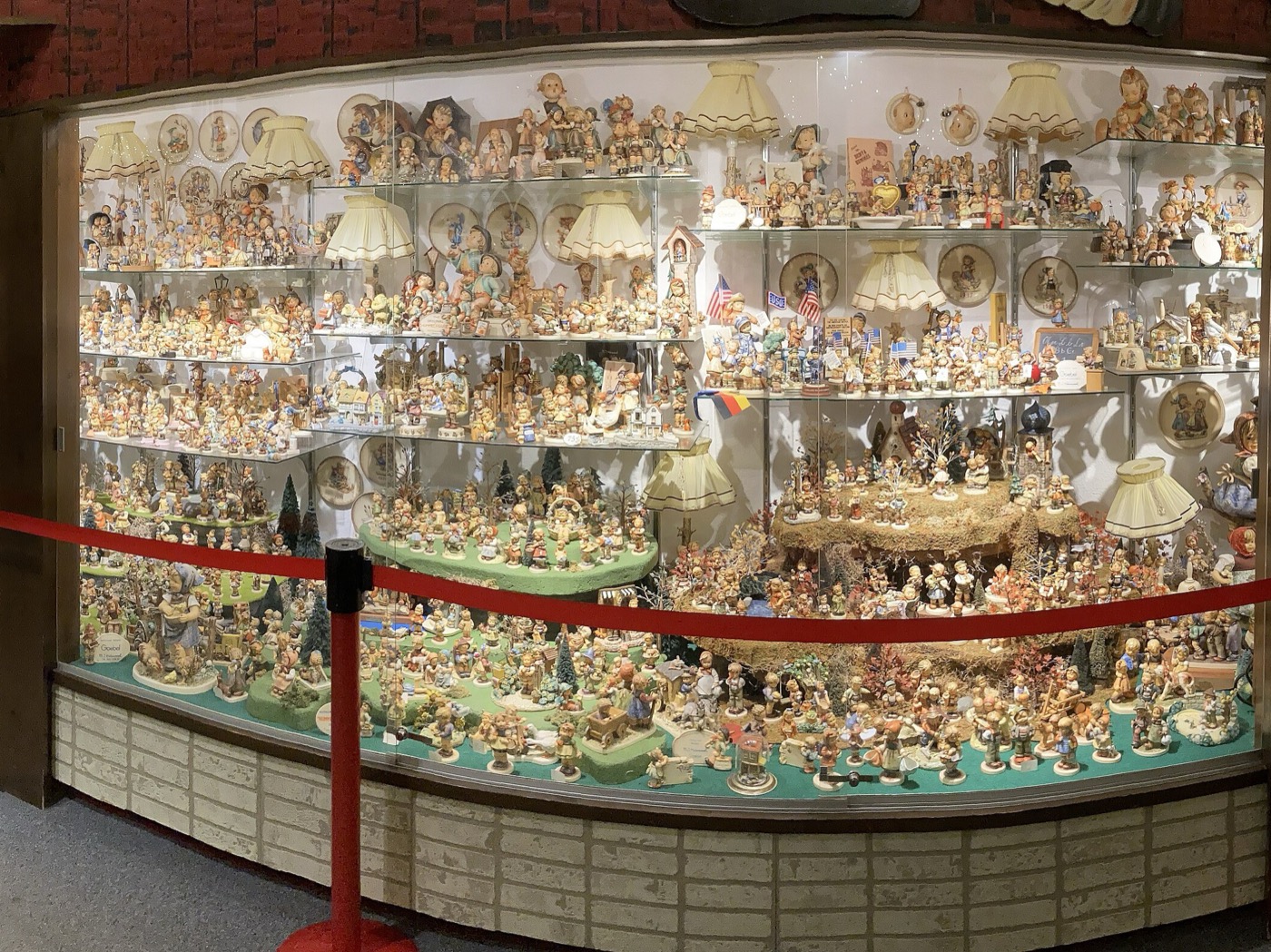
- Photo: Nheyob, Bronner's Christmas Wonderland (Frankenmuth, Michigan) Hummel figurines collection (CC BY 4.0), via Wikimedia Commons
Frequently Asked Questions
How do I tell how old a Hummel figurine is?
Turn it over and look for the trademark, or TMK. The Crown mark (TMK-1) is the earliest, used from about 1935 to 1950, followed by the Full Bee, Stylized Bee, Three Line Mark, Last Bee, Missing Bee, Hummel Mark, Millennium Bee and the post-2009 Manufaktur Rödental mark. Collector guides give slightly different date ranges, and one figure can carry more than one mark, so treat the dates as approximate.
Are Hummel figurines worth anything now?
Some are, but most common figurines sell for modest amounts because many collections are reaching the market at once and fewer new collectors are buying. Earlier marks, uncommon models, large sizes and perfect condition draw the most interest. Check completed sales for the exact model number and mark rather than asking prices.
What does the number on the bottom of a Hummel mean?
It's the model number, sometimes followed by a slash and a Roman numeral or other size designation. Collectors and buyers use it to identify the exact figure and size, so include it whenever you list, describe or ask about a piece.
Is a chipped Hummel worth selling?
Usually yes, as part of a group or at an estate sale, but damage and repairs lower interest considerably, especially on common models. Don't attempt a repair before selling; buyers generally prefer an honest chip to an amateur glue or paint job.
Should Hummels go in the estate sale or to an auction house?
A typical collection usually does best at the estate sale, where buyers can see everything at once. Pull out early-mark, rare or oversized pieces and ask the estate sale company, or an auction house, whether those deserve separate treatment. A good company will look at the bases before pricing.
Do I owe taxes when I sell inherited Hummels?
Usually not much, if any, because inherited property generally takes its value at the date of death as its tax basis, and most figurines sell for less than that. Collectibles have their own rules if there is a gain. Ask the estate's accountant; this is not tax advice.
Get Matched With an Estate Sale Company
Compare walkthroughs and written terms from New Jersey estate sale companies, including how they handle figurines, china and other collections that may belong with a specialist.
Get Matched Free