Selling Fine China and Crystal From an Estate: Identifying Patterns, Judging Condition, and Choosing Where It Sells
Many New Jersey estates include a china cabinet. Wedding china in its original boxes, a set of crystal stemware that came out twice a year, a punch bowl, a few pieces of a grandmother's hand-painted porcelain. Families often assume it's valuable because it was expensive and carefully kept. Sometimes it is. More often, the market for full formal dinner services is thinner than people expect, while certain patterns, single serving pieces and better antique porcelain still find buyers. This guide covers how to figure out what you have before anyone makes an offer, what buyers check, how replacement-pattern buyers work, the lead question with vintage dishes and crystal, and when an estate sale, a dealer, an auction or donation makes the most sense.
| What you find | What drives value | Typical route |
|---|---|---|
| Full modern dinner service, common pattern | Pattern demand; completeness; no chips | Estate sale, or a replacement-pattern buyer for individual pieces |
| Discontinued pattern in excellent condition | Buyers trying to complete their own sets | Get a replacement-pattern buyer's offer, then compare with the estate sale |
| Crystal stemware sets | Maker (often identified by stem shape), chips on rims | Estate sale, dealer, or replacement-pattern buyer |
| Monogrammed china or crystal | Smaller buyer pool; quality of the maker | Estate sale or family; rarely worth shipping |
| Antique or hand-painted porcelain | Maker's mark, age, decoration, condition | Have it looked at; auction for better pieces |
| Chipped, cracked or crazed pieces | Little resale value | Estate sale lots, family, or decorative use |
Before Anything Leaves the Cabinet
Leave the china and crystal where they are until someone has looked at them, or move everything together into one cool, dry room. Keep sets together, keep original boxes and paperwork, and don't let relatives take a few place settings 'just to use' before you know what the set is. A service for twelve is easier to sell than a service for nine. If the pieces are dusty, a gentle hand wash in warm water with mild soap is fine. Skip the dishwasher: Waterford's own care guide says dishwasher heat, friction and detergent can dull or scratch crystal, and gold or platinum trim on china is usually the first thing to wear. Dry everything fully before it goes into boxes.
Find the Maker and the Pattern
Turn a dinner plate over. Most factory-made china has a backstamp on the underside: the maker's name or mark, often a country of origin, and sometimes the pattern name or a pattern number. Write it down exactly, including numbers. Crystal is harder because many pieces have no mark or only a small acid-etched signature near the base. Replacements, Ltd., the large North Carolina buyer and seller of discontinued tableware, says the stem of a water goblet often tells its researchers who made a piece of crystal. If you can't identify a pattern, Replacements offers free identification: for china, it asks for images of the front and back of a dinner plate (not a saucer if you can avoid it), the plate size, whether it's rim or coupe shaped, and any marks; for crystal, an image of a stemmed piece against a dark background and its height in inches.
Count Everything and Write It Down
- Count each piece type separately: dinner plates, salad plates, bread plates, cups, saucers, soup bowls, and each serving piece (platters, vegetable bowls, gravy boat, sugar and creamer, teapot)
- For crystal, count by glass type: water goblets, wine glasses, champagne flutes, cordials, and any decanters, pitchers or bowls
- Note condition for each group: chips, cracks, hairline cracks, worn trim, cloudy glass, and crazing (a web of fine lines in the glaze)
- Photograph the front and the backstamp of one of each piece type
- Keep everyday dishes and formal china on separate lists. They go to different buyers
What Buyers Look For
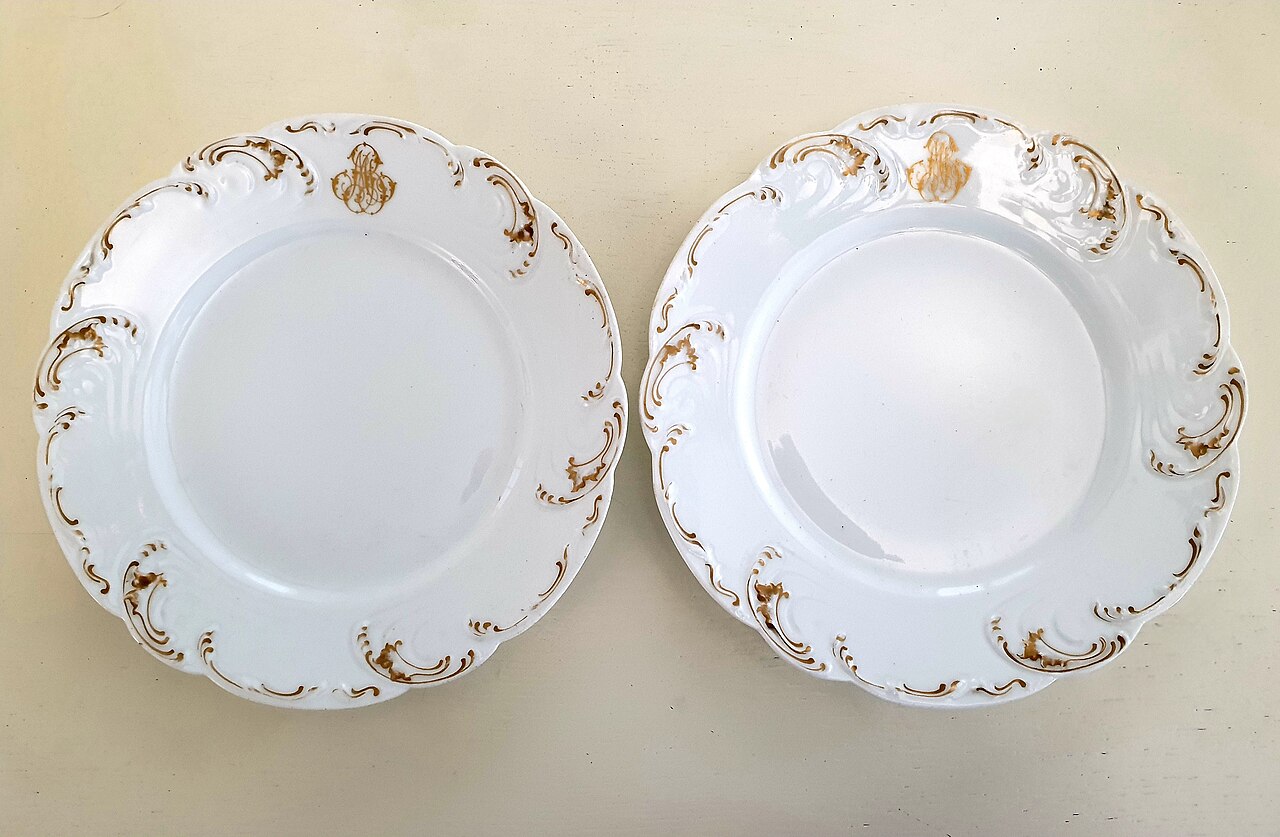
Condition matters more than age for most tableware. Buyers run a finger around plate rims and glass rims to feel for chips, hold cups up to the light to look for hairline cracks, and check whether gold or platinum trim is worn. Cloudiness inside crystal that won't wash off usually stays. Completeness matters too: matching place settings, the serving pieces from the same pattern, and lids that belong to their bowls. Monograms narrow the buyer pool, because most people don't want someone else's initials on their table. That doesn't make monogrammed pieces worthless, especially from better makers, but it changes where they sell. The two plates pictured above, antique Limoges with a gilt monogram, are a good example of pieces that interest a smaller circle of buyers.
How Replacement-Pattern Buyers Work
Much of the demand for discontinued china and crystal comes from people trying to replace a broken plate or complete their own set. Replacements, Ltd. buys from the public, and its published purchasing guidelines are a useful picture of how that market works. You request an Offer to Purchase with the brand and pattern name. Its offer lists the prices it will pay for pieces in excellent condition, it's valid for 30 days, and the pattern must match the offer's description exactly. Replacements says its prices are based on its own supply and demand, so if it already has enough of a pattern it may offer a low price or mark items 'Not Buying.' It says it may buy pieces with minor flaws at reduced prices, and it does not buy anything with chips or cracks. The seller is responsible for packing, shipping and insurance. After it inspects the shipment, it sends a final offer, generally within 14 days. It also asks sellers to contact it first if they have more than 12 of any single place-setting piece. For a family settling an estate, that means two things: a buyer like this can be a real option for a discontinued pattern in excellent condition, and the shipping, packing and inspection risk sits with you.
Clearing a Whole House, Not Just the China Cabinet?
Tell us about the house and your timeline, and we'll match you with New Jersey estate sale companies that price tableware and glassware and know when a pattern belongs with a specialist buyer instead. Free, no obligation.
Get Matched FreeRelated guides: selling sterling silver from an estate (flatware and serving pieces sell separately from china), how to price items for an estate sale, and what happens to unsold items after an estate sale.
Vintage Dishes, Lead Crystal and What to Tell Buyers
Older china and crystal can contain lead. The CDC lists antique and vintage dishware and lead crystal among the items that may contain lead, and says only a certified laboratory can accurately test a product for lead; home test kits don't show how much is present. Health Canada's guidance on lead crystalware says lead transfer increases with acidic drinks and with longer contact, which is why it advises limiting lead crystal to serving, not storing, things like wine, juice or spirits. You don't need to test every piece before a sale. Just don't describe vintage china or crystal as 'food safe' or 'lead free' unless you know it is, and don't promise it's dishwasher safe. Pieces sold as decorative or for occasional serving are described honestly.
Where Estate China and Crystal Usually Sell
- Estate sale: the usual home for full services, everyday dishes, glassware and kitchen items. Ask the company how it prices china, whether it sells sets intact or by the piece, and what happens to what doesn't sell
- Replacement-pattern buyer: worth an offer for discontinued patterns in excellent condition. Compare the net after shipping, insurance and possible rejected pieces
- Antique dealer or consignment shop: suited to better porcelain, decorative pieces and crystal from known makers. Ask for terms in writing
- Auction house: for important antique porcelain, rare patterns and pieces with documented history
- Online marketplace: can reach pattern collectors, but packing glass and china for shipping takes time and care, and breakage claims are your problem
- Family and donation: some heirlooms are worth more at a family table than at a sale. For what doesn't sell, see our guide to estate sale donation tax deductions
Packing China and Crystal if You Ship It
If you sell to a mail-in buyer or online, wrap each piece individually, keep plates on edge rather than stacked flat, fill every gap so nothing moves, and use a double box for anything fragile. Stemware is most vulnerable at the rim and the stem. Replacements tells sellers to confirm packaging and insurance with their shipping carrier and to insure the package for the offer value. Carriers have their own rules for fragile items and claims, so read them before you ship a set of twelve goblets.
Taxes When Heirs Sell Inherited China and Crystal
This is general information, not tax advice. Under 26 U.S.C. 1014, inherited property generally takes a basis equal to its fair market value at the date of death, or the alternate valuation date if the executor elects it. Tableware usually sells at or below that value, so most families see little or no taxable gain. If a collection includes valuable antique porcelain, a written appraisal near the date of death helps document the basis. New Jersey's inheritance tax and sales tax questions are covered in our separate guides.
Questions to Ask Before Accepting an Offer
- Is this offer for the whole cabinet, or only certain pieces? What happens to the rest?
- Are you pricing by the piece, the place setting or the lot?
- Did you check for chips, cracks and worn trim, or is the offer subject to inspection?
- Would any pieces do better at auction or with a pattern buyer?
- Who pays for packing and shipping, and who carries the risk of breakage?
- Will you put the offer in writing?
If relatives want the china, see dividing heirlooms and sentimental items. For the tax side, read are estate sale proceeds taxable and NJ inheritance tax and estate sales. For donating what doesn't sell, see estate sale donation tax deductions. This page is general information, not an appraisal or legal or tax advice.
Sources
- Replacements, Ltd.: Purchasing Guidelines for Selling to Us (Offer to Purchase, 30-day validity, condition, shipping, 14-day final offer)
- Replacements, Ltd.: China Identification Instructions
- Replacements, Ltd.: Identification tips for china, crystal and silver (stem identifies crystal maker)
- Waterford: Care Guide for crystal (hand washing, dishwasher dulling)
- CDC: About Lead in Consumer Products (vintage dishware, lead crystal, lab testing)
- Health Canada: Lead Crystalware and Your Health
- 26 U.S.C. 1014: Basis of property acquired from a decedent
Frequently Asked Questions
Is old fine china worth anything?
Some is, much isn't worth as much as families hope. Value depends on the maker, the pattern, demand from people completing their own sets, and condition. Discontinued patterns in excellent condition and better antique porcelain can sell well. Common patterns, chipped pieces and monogrammed sets usually sell for modest amounts, often best at an estate sale.
How do I find out what pattern my china is?
Look at the backstamp on the underside of a dinner plate and write down the maker, country and any pattern name or number. If that isn't enough, Replacements, Ltd. offers free pattern identification from photos of the front and back of a dinner plate, the plate size and its shape.
Will Replacements buy my china?
It may. Replacements issues an Offer to Purchase based on its own supply and demand, valid for 30 days, for pieces in excellent condition. It may offer a low price or mark a pattern 'Not Buying,' it doesn't buy chipped or cracked pieces, and the seller pays for packing, shipping and insurance.
Is vintage crystal safe to sell?
Yes, you can sell it, but describe it honestly. Older crystal may contain lead. The CDC lists lead crystal among vintage items that may contain lead, and Health Canada advises using lead crystal for serving rather than storing drinks. Don't call vintage pieces lead free or food safe unless you know they are.
Should I sell china at an estate sale or separately?
It depends on the pattern and your time. An estate sale handles full services, everyday dishes and glassware with the rest of the house. A replacement-pattern buyer, dealer or auction can do better for discontinued patterns or important antique pieces, but you'll handle more steps and the shipping risk.
Get Matched With an Estate Sale Company
Compare walkthroughs and written terms from New Jersey estate sale companies that handle china, crystal, silver and the rest of the house.
Get Matched Free