Selling Military Memorabilia From an Estate: What You Can Sell, What You Shouldn't, and Where It Goes
Clearing out the home of a parent or grandparent who served often turns up a footlocker in the attic, a uniform in a garment bag, a shadow box of medals, a bayonet, a stack of letters home, and now and then something that looks a lot like a hand grenade. Military items are some of the most emotional things in an estate, and a few of them come with legal and safety rules that ordinary household goods don't. This guide walks through each kind of item, what federal law and the big online marketplaces say about selling it, and how New Jersey families usually handle a veteran's collection during an estate sale.
| Item | What to know | Typical route |
|---|---|---|
| Possible grenade, shell, fuze or live rounds | Treat as live until police say otherwise (DoD 3Rs) | Leave it; call 911 |
| Firearms and war-trophy guns | Federal and New Jersey firearm law applies | See our firearms guide before any transfer |
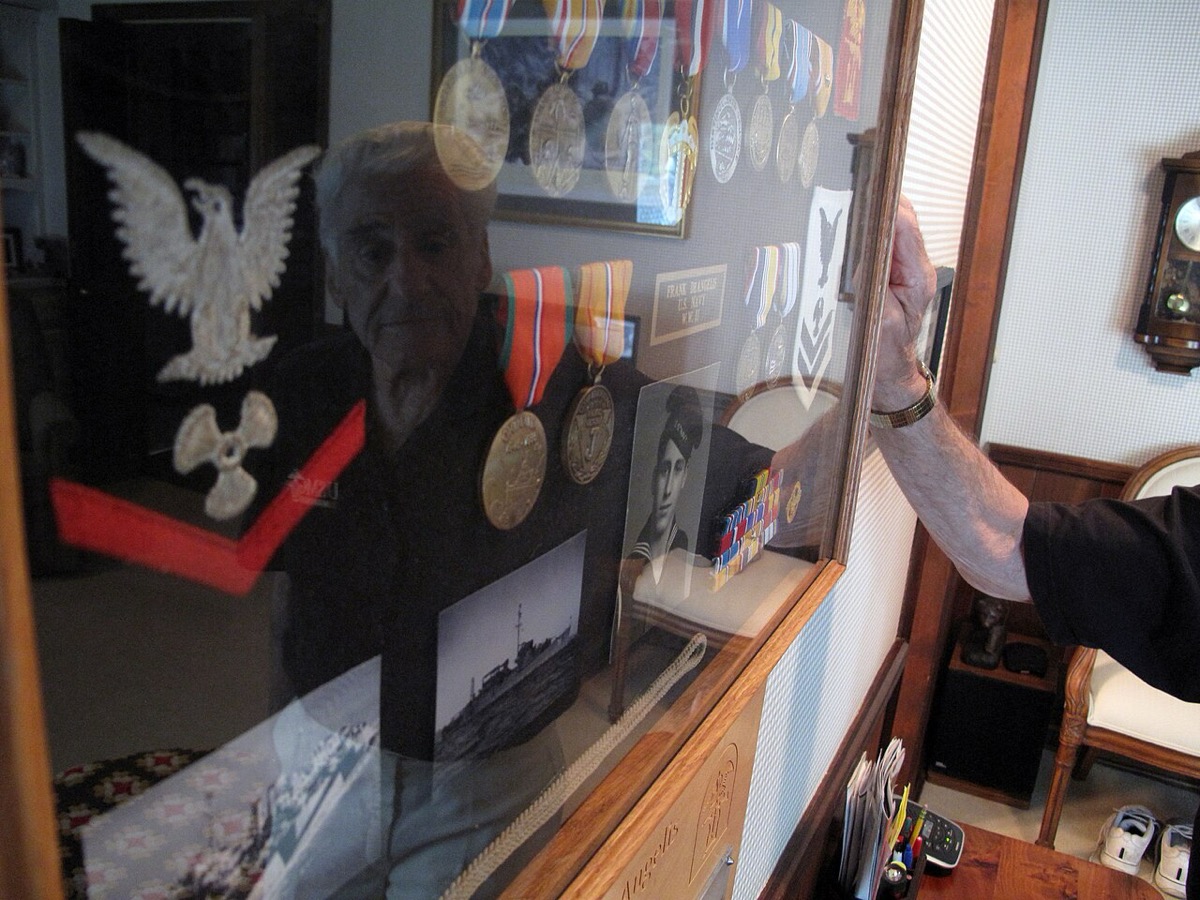
| Medals, ribbons, badges | 18 U.S.C. 704 limits sales; eBay bars government-issued medals | Family, replacement sets, museum; attorney before any sale |
| DD-214 and service records | Needed for burial, survivor benefits, medal requests | Keep with estate papers |
| Letters, diaries, photos | Historical interest; ties items to the veteran | Family, archives, Veterans History Project |
| Uniforms, patches, insignia | Vintage pieces collected as militaria; eBay 10-year rule | Estate sale, dealer or auction |
| Bayonets, swords, knives | Weapons; ask how the company secures them | Locked case, dealer or specialist auction |
Safety First: Ordnance and Firearms
- Anything that might be live ammunition or ordnance (grenades, mortar or artillery rounds, fuzes, blasting caps, flares): do not touch, move, or carry it out of the house. The Department of Defense's 3Rs of explosives safety are Recognize, Retreat and Report: recognize that it may be a munition, leave the area carefully, and call 911. Police can tell you whether it is inert
- Firearms, including war trophies and 'bring-back' rifles and pistols, follow federal and New Jersey firearm rules, not general estate-sale rules. Secure them and read our firearms guide before anyone lists, transfers or ships one
- Do not let an estate sale company, a buyer or a relative take a suspected munition 'to have it checked.' Transporting it is the risk
Read firearms at an estate sale before any gun leaves the house.
Medals and Decorations: Read This Before Listing Them
Federal law is stricter about military medals than most families expect. Under 18 U.S.C. 704(a), whoever knowingly sells, attempts to sell, advertises for sale, trades, barters or exchanges for anything of value any decoration or medal authorized by Congress for the U.S. armed forces, any service medal or badge awarded to members of those forces, or the ribbon, button or rosette of one, 'except when authorized under regulations made pursuant to law,' can be fined or imprisoned for up to six months. Subsection (c) raises the penalty to up to one year for a Medal of Honor, and subsection (d) does the same for the Distinguished Service Cross, Navy Cross, Air Force Cross, Silver Star, Purple Heart and combat badges. Militaria does change hands in the collector market, and how this statute applies to a particular inherited medal is a legal question we can't answer for you. Practically: don't put medals out on the estate-sale tables, never try to sell a Medal of Honor, and talk with the estate's attorney before any medal is offered for sale. eBay's Government items policy separately lists 'government-issued medals and certificates for medals' among items not allowed on its site.
Better Homes for Medals Than a Sale
- Family first. Medals are usually the items relatives most want, and they are hard to split fairly once they leave the house. Our guide to dividing heirlooms covers how families handle it
- Replacement sets. According to the National Archives, the military services generally issue replacement medals to the veteran at no cost, and next of kin can request them, with process and cost varying by branch. That can let more than one family member have a set
- Museums and historical societies. Local and regimental museums sometimes accept medals with the veteran's story attached. Call first; many have collecting policies and can't take everything
- Keep the group together. If the medals stay in the family or go to a museum, keep them with the citation, photos and discharge papers so the story travels with them
Service Records and Papers: Keep Them
The veteran's DD-214 (discharge papers) and other service records are documents, not sale items. Families need them for burial benefits, survivor benefits and replacement medal requests. Put them with the will, deeds and other estate papers. If the DD-214 can't be found, the National Personnel Records Center handles requests for military personnel files. Letters home, diaries, unit photos and orders are a different matter: they can carry real historical interest. The Library of Congress Veterans History Project collects first-person accounts and some original materials from U.S. veterans; check its submission guidelines before sending anything.
Uniforms, Insignia and Patches
Uniforms, hats, patches, rating badges and unit insignia from past wars turn up in many estates and are part of what collectors call militaria. On eBay, the Government items policy says government uniforms and accessories are not allowed unless they are vintage or collectible pieces that are at least 10 years old, no longer in use, and don't look like a current uniform. A World War II or Korea-era uniform usually meets that test; a recent uniform usually doesn't. Condition matters to collectors: leave moth damage, stains and tags as they are rather than cleaning or altering them, and keep the uniform with any name tapes or laundry marks that tie it to the veteran.
Bayonets, Swords and Knives
Edged weapons such as bayonets, fighting knives, machetes and dress swords are common in veterans' estates and are traded among collectors. They are weapons, though, and New Jersey has its own laws on weapons. Ask the estate sale company up front whether it handles edged weapons, how it displays them (most use a locked case), and whether it sells them at the sale or refers them to a militaria dealer or auction house. Don't leave them out where children can reach them during setup or the sale.
War Souvenirs and Captured Items
Many World War II veterans brought home helmets, flags, bayonets, insignia and other items from the other side. These can have collector interest, but they need the same safety check as anything else (a helmet is fine; a 'deactivated' shell or grenade needs to be confirmed inert by police, not by a relative). Some items, such as Nazi-era insignia, are legal to own in the United States but are emotionally charged and limited on some online platforms. Handle them privately and through a specialist rather than on the sale tables, and check each marketplace's rules before anything is listed.
Clearing a Veteran's Home in New Jersey?
Tell us about the house, what's in it and your timeline, and we'll match you with New Jersey estate sale companies that will set military items aside for the family and know when a piece belongs with a specialist instead. Free, no obligation.
Get Matched FreeWhere Military Items From an Estate Usually Go
- Kept by the family: medals, the flag from a military funeral, photographs, letters and service papers usually stay in the family
- Estate sale: common uniforms, field gear, footlockers, books and non-weapon memorabilia can sell at a well-run estate sale. Weapons and medals usually should not go on the open tables
- Militaria dealer: for a mixed collection, a dealer can sort what has collector interest. Ask for an itemized written offer, not one number for the lot
- Specialist auction house: worth it for documented groups, rare insignia, edged weapons or historically significant items with provenance
- Donation: museums, historical societies and the Veterans History Project for papers and stories. Our donation tax deduction guide explains what an estate can and can't deduct
Questions to Ask an Estate Sale Company
- Do you handle military items, and do you bring in a militaria dealer or send them to auction?
- Will you keep medals, papers and photographs aside for the family instead of pricing them?
- How do you secure edged weapons and anything that looks like ammunition during setup and the sale?
- If a dealer makes an offer through you, is your commission taken from it? Put the answer in the contract
- What happens to military items that don't sell? See what happens to unsold items after an estate sale
Red Flags
- A buyer who shows up after an obituary asking specifically about 'war stuff' or medals
- Anyone offering to take a suspected grenade or shell away 'to check it'
- A single cash offer for the whole footlocker before anything has been looked at
- Pressure to split up a medal group or separate medals from their papers
- A company that wants to price medals for the sale tables without asking the family. Our scams guide covers more of these
Before anything is divided, read dividing heirlooms and sentimental items. For papers and personal items that should never be sold, see what not to sell at an estate sale. If you plan to donate, check estate sale donations and tax deductions, and before signing with a company, review the estate sale company contract checklist. This page is general information, not legal advice or an appraisal.
Sources
- 18 U.S.C. 704: Military medals or decorations (Cornell LII)
- eBay: Government items policy (government-issued medals; vintage uniform rule), checked November 9, 2026
- U.S. Department of Defense: 3Rs (Recognize, Retreat, Report) explosives safety
- National Archives: Replacing military awards and decorations
- National Archives: Requesting military service records (DD-214)
- Library of Congress: Veterans History Project
- Photo: U.S. Marine Corps, Lincroft, N.J., 2009 (public domain), via Wikimedia Commons
Frequently Asked Questions
Is it legal to sell my father's military medals?
Be careful. Federal law, 18 U.S.C. 704(a), makes it an offense to knowingly sell, trade or advertise for sale U.S. military decorations, service medals and badges, except when authorized under regulations made pursuant to law, with higher penalties for the Medal of Honor, Distinguished Service Cross, Navy Cross, Air Force Cross, Silver Star, Purple Heart and combat badges. eBay's Government items policy also lists government-issued medals as not allowed. Talk with the estate's attorney before offering any medal for sale, and consider keeping medals in the family or donating them.
What should I do if I find a grenade or artillery shell in a parent's house?
Don't touch or move it. Follow the Department of Defense's 3Rs: Recognize that it may be a munition, Retreat from the area, and Report it by calling 911. Police can determine whether it is inert. Don't let anyone carry it out of the house to have it checked.
Can I sell a World War II uniform?
Generally, old uniforms are collected and traded as militaria. On eBay, vintage government uniforms may be listed only if they are at least 10 years old, no longer in use, and don't look like a current uniform. Leave the uniform as found, with name tapes and tags, since collectors care about originality.
Should military memorabilia go in the estate sale?
Some of it. Common uniforms, field gear, footlockers and books can sell at an estate sale. Medals, firearms, edged weapons, suspected ordnance and service papers should be pulled before the sale and handled separately, by the family, a specialist dealer or auction house, or police in the case of ordnance.
What do we do with a veteran's DD-214 and letters?
Keep the DD-214 with the estate papers; families need it for burial and survivor benefits and replacement medal requests. Letters, diaries and photos may be of historical interest; the Library of Congress Veterans History Project collects veterans' first-person accounts and some original materials, subject to its guidelines.
Get Matched With an Estate Sale Company
Compare walkthroughs and written terms from New Jersey estate sale companies, including how they handle medals, weapons and a veteran's papers.
Get Matched Free